It is normal. You are not going mad.
What you feel after a separation is how humans are built to react to loss and threat. The hard moments are predictable, so you can plan for them. Here is what the course walks you through.
It is grief
You are losing a person, the plans you made and the family you pictured. Disbelief, anger, bargaining and sadness can all turn up in one day. You will also see the separation through your child's eyes.
Module 1 · start free →
It is your alarm system
Betrayal and rejection set off the same alarm as physical danger: fight (argue, attack, win), flight (avoid, leave, disappear) or freeze (go blank, shut down, cannot think). It is why good people act out of character. You will learn the pause before you hit send.
Module 2 · the start is free →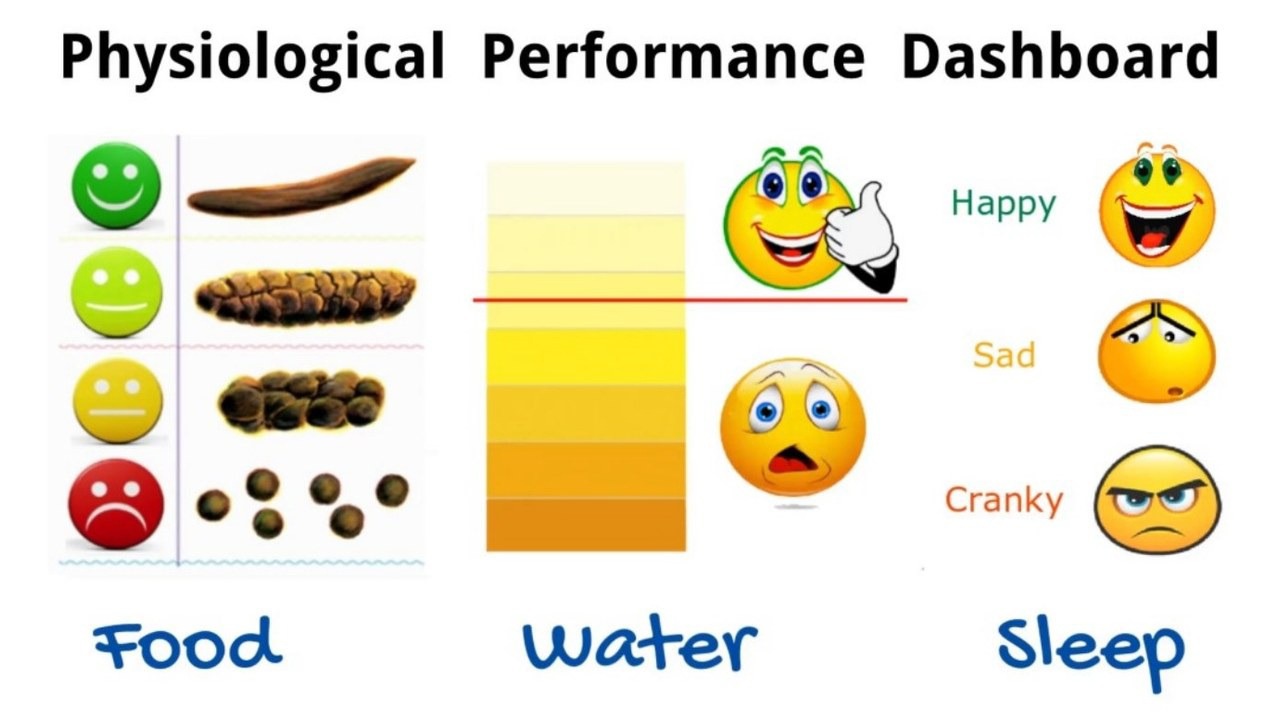
Your body is carrying it
Rejection lights up the same parts of the brain as physical pain. Stress shows up in sleep, appetite and patience, for you and your children. Looking after the basics comes first.
Module 3 →
Your children feel every round
Children read faces and tone long before they understand words. It is ongoing conflict, not the separation itself, that harms them most. You will learn to be their safe place, and how to repair things after you snap.
Module 4 →
The hard moments are coming
Handovers, bedtimes, birthdays, a new partner, a child who says the other house has no rules. You know they are coming, so you can decide now how you will handle them across two homes.
Module 5 →
All you need is an Action Plan
In each module you choose one thing you will actually do. At the end they come together in your own printable Action Plan, to keep and come back to when things get hard.
Wrap-up →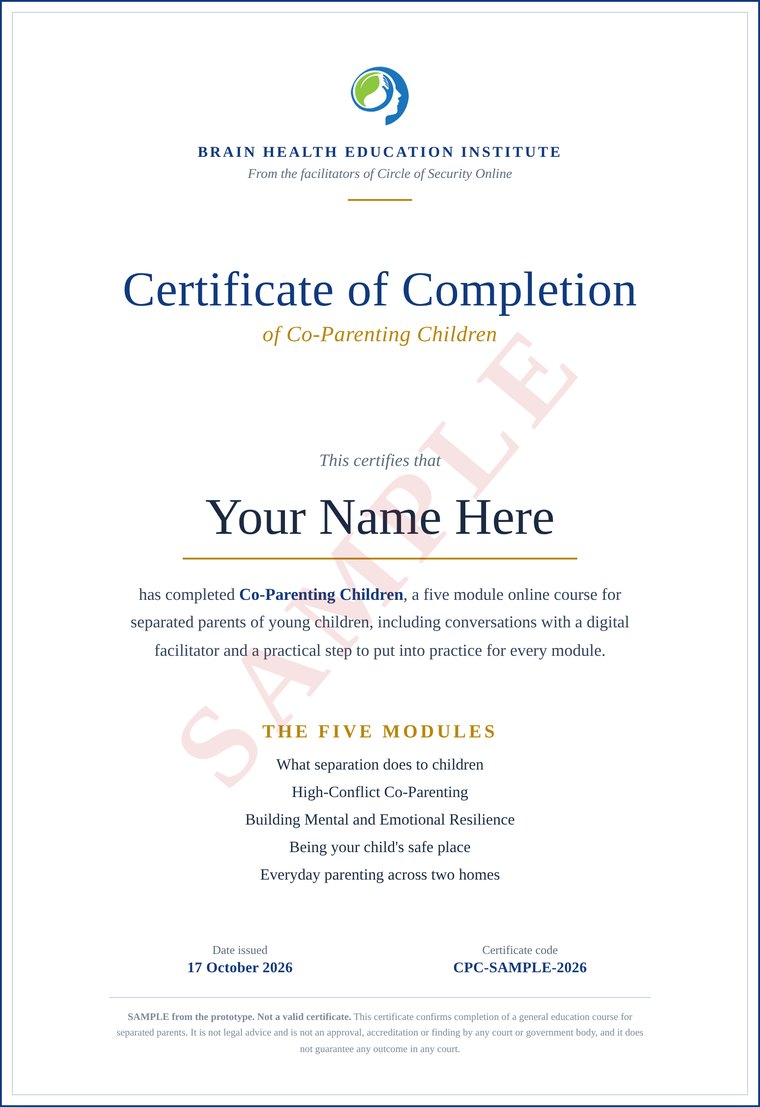
Proof you have done the work
Finish the course and you receive a registered Certificate of Completion from the Brain Health Education Institute, listing the five modules.
If things end up in mediation, negotiation or court, it shows you have taken real steps to learn and to handle things better for your children. You can share it with your lawyer, a mediator or the court if you choose. How much weight it is given is up to them.
Included in the full courseThis isn't just a chatbot answering questions on demand.
The underlying software engine uses our proprietary digital reasoning modeled directly on the 2025 Harvard trial which established that students using a well-designed, interactive digital tutor learned more than twice as much as those in traditional, highly active-learning classrooms. Traditional digital learning relies on passive consumption - watching a video, reading a block of text, and nodding along. Our software breaks that loop entirely by enforcing strict comprehension gates before moving on to the next video.
In Australia, call Lifeline on 13 11 14, or 1800RESPECT on 1800 737 732. In an emergency, call 000. Anywhere else in the world, find a free, confidential helpline at www.findahelpline.com
Sources
- Kross and others (2011). Social rejection shares somatosensory representations with physical pain. PNAS.
- Harold and others (2016). What works to enhance inter-parental relationships and improve outcomes for children. Early Intervention Foundation.
- Holmes and Rahe (1967). The Social Readjustment Rating Scale.